Quick Summary
You may be able to get a dental implant the same day a tooth is extracted, or you may need to wait several weeks or months. The right timing depends on the bone supporting the implant, the condition of the extraction socket, gum health, and whether infection or bone grafting needs to be addressed. A periodontist evaluates these factors to determine when the implant can be placed in a stable, functional position. If you already know you want an implant, discussing your options before the extraction can help preserve more treatment choices.
- Immediate placement: The implant is placed during the same appointment as the tooth extraction.
- Early placement: The implant is placed after approximately 4 to 8 weeks of soft-tissue healing or 12 to 16 weeks of partial bone healing.
- Late placement: The implant is placed after more than six months, once the extraction site has healed more completely.
- Bone loss, infection, and gum disease: These can change the recommended timing, but the decision depends on the individual site.
- Planning ahead: A consultation before extraction can help determine whether immediate placement or socket preservation should be considered.
How Long After Tooth Extraction Can You Get a Dental Implant?
The time between removing a tooth and placing a dental implant can range from the same day to several months. Although patients often want to replace a failing tooth as quickly as possible, placing an implant sooner is not automatically better. The goal is to give the implant adequate support while protecting the surrounding bone and gum tissue.
Dental specialists generally use three broad timing categories: immediate, early, and late implant placement. Early placement can be divided further based on how much healing has occurred.
| Placement approach | Typical timing after extraction | When it may be considered |
|---|---|---|
| Immediate placement | Same day | When the extraction site has suitable anatomy and enough healthy supporting bone to stabilize the implant. |
| Early placement after soft-tissue healing | 4 to 8 weeks | When allowing the gums to heal first may improve the conditions for implant placement. |
| Early placement after partial bone healing | 12 to 16 weeks | When additional bone healing is needed before the implant can be positioned securely. |
| Late placement | More than 6 months | When longer healing, staged bone reconstruction, or other patient-specific circumstances make earlier placement unsuitable. |
These ranges follow the International Team for Implantology (ITI) consensus on implant placement protocols. They describe common treatment approaches, not fixed deadlines. Your recommended schedule may differ depending on how the extraction site heals and whether additional procedures are necessary.
If you are considering tooth replacement, our overview of dental implants in Los Angeles explains the broader treatment process and available implant options.
How Bone Volume and Socket Health Determine Implant Timing
A dental implant is a small post, commonly made of titanium, that is placed into the jawbone to support a replacement tooth. Over time, living bone grows against its surface through a process called osseointegration. Successful treatment begins with positioning the implant where it can remain stable while that healing occurs.
After a tooth is extracted, the socket is surrounded by bony walls that previously supported the tooth’s roots. Their thickness, shape, and condition influence whether an implant can be placed immediately.
When the socket walls are intact and enough supporting bone is available, immediate placement may be possible. If a wall is thin, damaged, or missing, the periodontist may recommend allowing the site to heal or performing bone grafting before placement.
For someone replacing a single missing or failing tooth, the treatment plan also needs to account for the eventual crown. Our single dental implant treatment page explains how an individual implant can support a replacement tooth.
Primary Stability Matters More Than Speed
One of the most important requirements is primary stability. This describes how securely the implant is held in the bone at the time of surgery, before new bone has grown against its surface.
For immediate placement, the available bone must support the implant in the correct position. That may include bone extending beyond the original tooth socket. Simply having an open socket does not mean an implant can be placed securely within it.
The implant also needs to be positioned for the eventual replacement tooth, not just wherever bone happens to be available. This is particularly important for front teeth, where the final appearance of the gumline and crown matters.
How CBCT Imaging Helps Evaluate the Site
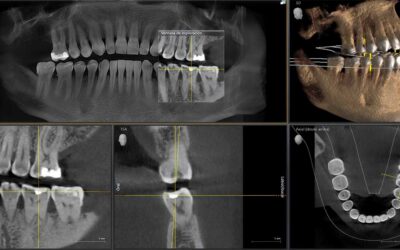
A periodontist may use cone beam computed tomography (CBCT), a three-dimensional imaging technique, when detailed assessment of the bone and surrounding anatomy is needed.
CBCT imaging can help identify the height and width of available bone, the condition of the socket walls, and the location of nearby structures such as nerves and the maxillary sinus. These details can influence the recommended implant position and whether additional grafting is necessary.
At the Center for Advanced Periodontal & Implant Therapy, CBCT technology supports three-dimensional evaluation and implant treatment planning. Imaging findings are considered alongside the clinical examination and the patient’s overall treatment needs.
When Bone Grafting Changes the Timeline
When there is insufficient bone to support an implant in the desired position, dental bone grafting may be recommended. A graft provides a framework that supports bone healing and helps restore or maintain the jawbone’s shape.
Some sites can receive a bone graft at the same appointment as implant placement. Other cases require a staged approach, with the graft placed first and the implant placed after sufficient healing.
The healing period depends on the size and location of the defect, the grafting approach, and the patient’s response to treatment. More extensive reconstruction may require several months before the implant can be placed.
For patients who need a tooth extracted but are not receiving an immediate implant, socket preservation may be recommended. This procedure generally involves placing graft material into the extraction socket to help limit the bone loss that naturally occurs after a tooth is removed.
Socket preservation does not eliminate every change in bone volume or guarantee that future grafting will be unnecessary. However, it may help maintain the ridge dimensions needed for a later implant.
Can You Get a Dental Implant if the Tooth Is Infected?
Infection is an important consideration, but it does not always mean a dental implant must be delayed for several months. The type and extent of infection, the remaining bone, and the ability to thoroughly treat the site all matter.
For example, a tooth with a chronic infection near the root tip may present different conditions from a tooth with an acute, spreading infection. A 2024 systematic review and meta-analysis of immediate implants in sites with and without periapical pathology examined outcomes in these circumstances. The findings support considering immediate placement in selected cases while recognizing that appropriate site assessment and treatment remain essential.
However, that does not mean immediate placement is suitable for every infected site. The ITI clinical recommendations identify the absence of acute infection as a criterion for immediate placement with immediate restoration or loading. The presence of infection requires careful assessment rather than a decision based only on the desire to avoid another appointment.
If infection has damaged the supporting bone, reduced the ability to achieve primary stability, or created unfavorable conditions for healing, the periodontist may recommend extraction, treatment of the infection, and a healing period before implant surgery.
What if You Also Have Gum Disease?
Active periodontal disease can affect the bone and soft tissues that support both natural teeth and dental implants. Uncontrolled periodontal inflammation and a history of periodontitis can increase the risk of complications around implants.
When gum disease is present, treatment may be needed to establish better periodontal health before implant placement. Your periodontist will also consider how the condition can be managed after the implant is restored.
The American Academy of Periodontology’s patient guidance on dental implant procedures provides additional information about implant treatment and the importance of maintaining healthy supporting tissues.
The goal is not simply to wait for a set number of weeks. It is to address the factors that could interfere with implant healing and long-term maintenance.
Immediate vs. Early vs. Late Dental Implant Placement
Each placement approach has potential advantages and limitations. The best option depends on the condition of the extraction site, the planned restoration, and the patient’s needs.
Immediate Implant Placement
With immediate placement, the tooth is removed and the implant is placed during the same surgical appointment. This may reduce the number of procedures and shorten the time between extraction and implant placement.
However, immediate placement requires favorable conditions, including the ability to position the implant correctly and achieve sufficient primary stability. The condition of the facial bone wall and gum tissue is especially important when replacing a front tooth.
Immediate placement also does not automatically prevent the bone and gum changes that occur after extraction. Additional grafting or soft-tissue procedures may still be needed.
Another important distinction is that placing the implant immediately does not necessarily mean attaching a usable replacement tooth immediately. Implant placement and implant loading are separate treatment decisions. Our article comparing immediate-load versus traditional dental implants explains that difference.
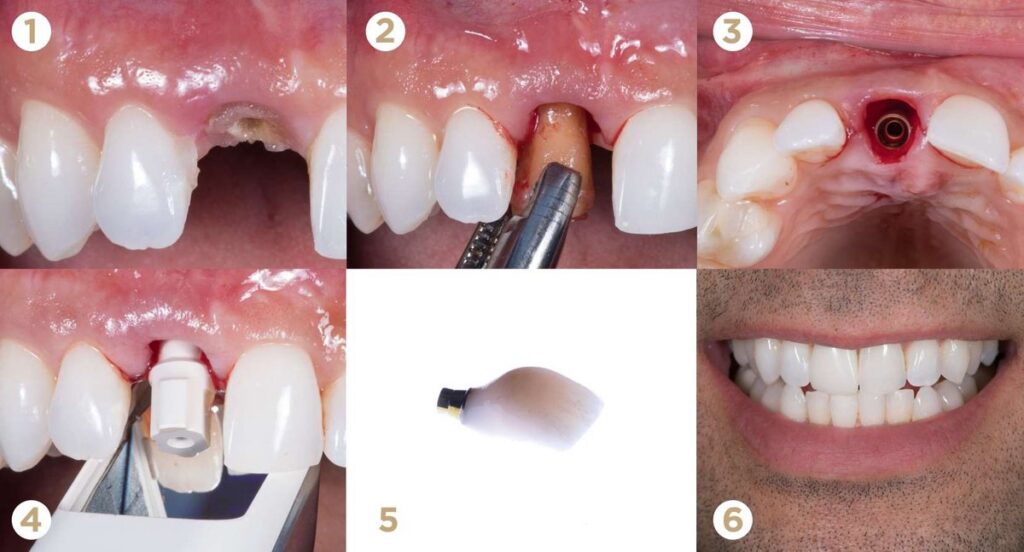
Immediate placement: the tooth is removed and the implant is placed during the same appointment.Early Implant Placement
Early placement allows some healing before the implant is inserted. Depending on the clinical situation, the periodontist may allow approximately four to eight weeks for soft-tissue healing or approximately 12 to 16 weeks for partial bone healing.
Waiting can provide better soft-tissue coverage, allow inflammation to resolve, or create improved conditions for implant stability. Early placement can also be combined with bone augmentation when necessary.
For patients who are not good candidates for immediate placement, this approach may offer a useful balance between healing and treatment time.
Late Implant Placement
Late placement is generally defined as implant placement after more than six months of healing. It may be necessary when extensive bone rebuilding, medical considerations, or other circumstances prevent earlier treatment.
Although waiting allows more time for healing, it does not necessarily preserve the existing bone. The jawbone often loses volume after extraction, which can make future implant treatment more complex.
For that reason, late placement is not automatically the safest or most predictable option. The decision should include consideration of socket preservation and future implant positioning when the tooth is first removed.
If you had a tooth removed months or years ago, an implant may still be possible. Our article about getting dental implants years after extraction explains what may need to be evaluated.
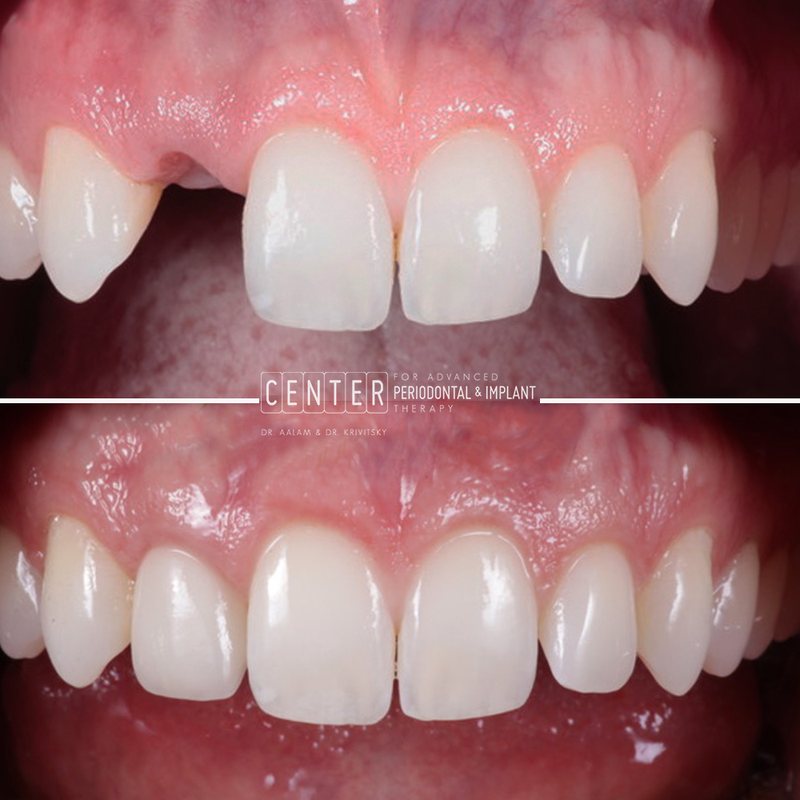
A single implant can restore a missing front tooth after the extraction site has healed.What Happens if You Have to Wait for Your Dental Implant?
For many patients, the waiting period raises a practical concern: what will happen to the empty space after the tooth is removed?
The answer depends on which tooth is missing, whether it is visible when you smile, and how the surrounding teeth and tissues need to be protected during healing.
Can You Have a Temporary Tooth While Waiting?
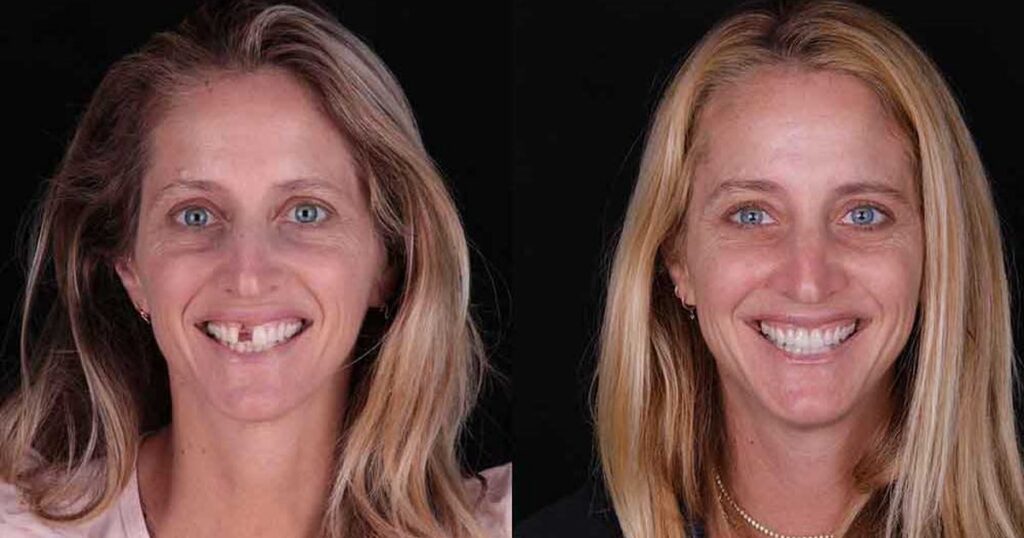
In some cases, a temporary replacement tooth can be used while the extraction site heals or while the implant integrates with the bone.
Options may include a removable temporary appliance, an adhesive-supported temporary replacement, or a provisional restoration supported by an implant when the clinical conditions allow.
Not every option is appropriate for every patient. A temporary tooth must be designed so it does not interfere with the surgical site or place excessive pressure on an implant that is still healing.
This is an especially important planning discussion when a front tooth needs to be removed. Your periodontist and restoring dentist can determine which temporary solution is appropriate for your appearance and function during treatment.
Will Waiting Cause Bone Loss?
Bone remodeling begins after a tooth is extracted. Without the tooth and its supporting structures, the surrounding ridge commonly becomes narrower and may lose height over time.
These changes can occur even when the gum tissue appears fully healed. In some patients, the remaining bone is still adequate for an implant. In others, additional grafting may be needed.
If implant placement must be postponed, preserving the extraction socket may help reduce the amount of bone loss. This is one reason to discuss future tooth replacement before the extraction whenever possible.
Can You Leave the Space Empty?
Depending on the location of the missing tooth, a temporary replacement may not always be necessary. However, leaving the space unrestored for an extended period can allow neighboring teeth to shift or the opposing tooth to move into the open space.
These changes do not occur the same way in every patient, but they can complicate future restorative planning. Your dentist can help determine whether a temporary tooth or another measure is appropriate while you wait.
Should You See a Periodontist Before Having a Tooth Extracted?
If your dentist has recommended extracting a tooth and you are interested in a dental implant, consulting a periodontist before the extraction can be beneficial.
The extraction itself can influence the options available for replacing the tooth. When implant treatment is planned in advance, the specialist can assess whether immediate placement is feasible, whether socket preservation would be helpful, and how the final replacement tooth should be positioned.
Ideally, this discussion takes place before the tooth is removed, particularly when the tooth is in a visible part of your smile or when significant bone loss is suspected.
Planning ahead may help answer several important questions:
- Can the tooth be extracted and the implant placed during the same appointment?
- Is there enough bone to support an implant in the correct position?
- Should socket preservation or another bone grafting procedure be performed at extraction?
- Will a temporary tooth be needed while the site heals?
- How will the implant surgery be coordinated with the dentist providing the final crown?
If your tooth has already been extracted, you can still seek an implant evaluation. The periodontist can assess the healed or healing site and determine whether additional treatment is needed before implant placement.
If you have severe pain, swelling, fever, or signs of a spreading infection, contact your dental provider promptly rather than delaying necessary care to arrange elective implant planning.
How a Periodontist Plans Implant Placement Timing
A periodontist is a dental specialist with advanced training in the supporting structures of the teeth, periodontal disease, bone and soft-tissue treatment, and dental implant placement.
An implant evaluation typically includes a review of your dental and medical history, an examination of the teeth and gums, and appropriate diagnostic imaging. CBCT may be recommended when three-dimensional evaluation is needed to assess the proposed implant site.
The specialist considers several factors together, including:
- The condition and thickness of the extraction socket walls.
- The amount and quality of bone available for primary implant stability.
- Whether infection or periodontal inflammation needs treatment.
- The health and thickness of the surrounding gum tissue.
- The position of the proposed implant and final replacement tooth.
- Whether bone grafting or soft-tissue augmentation may be needed.
- Medical conditions, medications, smoking, and other patient-specific risk factors that may affect healing.
These findings help determine whether immediate, early, or late placement is appropriate. The treatment plan may also include an alternative approach if conditions encountered during extraction differ from what was expected.
Why Three-Dimensional Planning Matters
A conventional dental X-ray can provide useful information, but it cannot show every aspect of the bone in three dimensions. CBCT imaging, when clinically indicated, allows the periodontist to examine the proposed implant site from multiple angles and assess important anatomical structures.
For example, imaging may reveal that the outer bone wall is thinner than expected or that the available bone does not support an implant in the ideal restorative position. These findings can change whether immediate placement, grafting, or additional healing is recommended.
In appropriate cases, the practice may also use guided dental implant surgery. This approach uses digital treatment planning and a surgical guide to help transfer the planned implant position to the procedure.
At the Center for Advanced Periodontal & Implant Therapy, Dr. Alexandre Aalam and Dr. Alina Krivitsky incorporate advanced imaging and implant treatment planning into their periodontal and implant services.
The periodontist may coordinate with your general dentist or restorative dentist, who often provides the final crown. Planning the surgical and restorative phases together helps ensure that the implant is positioned to support the intended replacement tooth.
Discuss Your Extraction and Implant Timing With Our West Los Angeles Specialists
If your dentist has recommended removing a tooth, you do not necessarily have to wait until after the extraction to explore your implant options.
Dr. Alexandre Aalam, DDS, and Dr. Alina Krivitsky, DDS, are dual board-certified periodontists at the Center for Advanced Periodontal & Implant Therapy. They evaluate the supporting bone, surrounding gum tissue, and individual treatment needs to help patients determine an appropriate approach to dental implant placement.
Whether you are considering a same-day implant, need bone grafting, or have already had a tooth extracted, an evaluation can help clarify the next steps and what to expect during treatment.
Our practice is located in the Brentwood area of West Los Angeles. If you have been advised to have a tooth removed and want to understand your replacement options, schedule a consultation to discuss your implant timing and treatment plan.
Sources
- International Team for Implantology. Implant Placement and Loading Protocols: Consensus Statements. Clinical classifications and recommendations for immediate, early, and late placement.
- International Team for Implantology. Implants in Postextraction Sites: Consensus Statements. Clinical recommendations for extraction-site assessment and implant treatment planning.
- Pranckeviciene A, et al. Comparison of Immediate Implantation into the Socket with and without Periapical Pathology: Systematic Review and Meta-Analysis. Medicina. 2024.
- American Academy of Periodontology. Dental Implant Procedures. Patient education on implant treatment and related procedures.