
Why Are My Gums Dark: 5 Discoloration Reasons
Quick summary
Dark gums can result from natural melanin production, smoking-related melanosis, medications like Minocycline, rare conditions like Addison’s disease, or amalgam tattoos from dental procedures. Professional gum depigmentation uses microdermabrasion or laser techniques to remove pigmented tissue and reveal healthy pink gums beneath, with results that last a lifetime.
Key takeaways
- Schedule a periodontal evaluation if your gum color has changed over time or black patches have appeared, as this could indicate smoking damage, medication side effects, or infection rather than natural pigmentation.
- Consider laser gum depigmentation if cosmetic concerns about dark gums affect your confidence, since the procedure targets melanin-producing cells and creates permanent results in under an hour.
- Review your current medications with your doctor if you are taking Minocycline for acne, as it can cause dark gum discoloration and hyperpigmentation in your mouth tissue.
- Monitor for early signs of trench mouth including bleeding gums, bad breath, and excess saliva, which require professional cleaning and possible antibiotics to prevent tissue damage.
A beautiful smile is a sign of the overall health of its owner. Healthy gums are usually pale pink and firm to the touch. But what if the gums change color? Or you have black spots on your gums, black spots around your teeth, or your gums are turning dark? These could be regular hormonal changes, or they could be the sign of a more serious medical condition. Keep reading to learn more about the possible causes of black gums, darkened gums, and gum discoloration and how to treat dark gums.
Common Causes for Gum Discoloration
Normally, people of the European race have pale-pink gums; people with dark skin color have a brown shade on it, due to the extra melanin production. If the color of the gums changes, it is a signal of various diseases, even if they do not show up visibly. The most typical issue is that while turning black, gums lose it’s natural look and makes the person feels uncomfortable. Below you can find the list of this and other symptoms with possible reasons for it.
- Pale gums: anemia and side effect of bleaching
- Red gums color: inflammation
- Bluish-gray and blue spots: drugs, poisoning
- White spots: stomatitis, leukoplakia, thrush
- Brown and black spots: smoking, diseases
Gums may be abnormally pale. This would not be a white color, but not a healthy pink. Anemia can be the cause of this problem; then the pallor will be associated with a decreased content of hemoglobin in the blood.
Sometimes the gums become pale as a result of teeth whitening. This gum lightening side effect is a result of the whitening agent usage. It will disappear in a short period of time.
The bright red color of the gums indicates an active inflammatory process. For example, it could be gingivitis. Bleeding is one more symptom which accompanies red gums. Local inflammation and bright red color occur while a problematic teething.
Blue spots on the gums are the result of circulatory disorders. Some drugs can also change the color of the gums. The same will happen when a person is poisoned with salts of some metals.
White patches on the gums may be symptoms of several pathologies. One of the most common diseases, when you can see white spots, is stomatitis.
Oval or round sores have red edges and white or yellowish centers. When the disease progresses, the spots become brown and black. After recovery, they disappear.
What else causes black gums?
There are several things from your overall health to gum disease, medications, and personal choices that can cause black gums and color changes to occur in gum tissue, including:
- Melanin: The body naturally creates melanin, a substance in skin, hair, and eyes. The more melanin people have in their bodies, the darker their skin and hair will be. Dark brown or black gums may be due to a person having more melanin in the body. If a person’s gums have always been dark, there is no cause for concern. If the gum color changes over time or if patches of black appear on the gums, it could be that something else is going on and not just because of melanin and should be checked by a periodontist or dentist.
- Smoking and Smoker’s Melanosis: Smoking can cause a change in the color of your gums called smoker’s melanosis. The nicotine can make melanocytes produce more melanin than usual, which will change the color of your gums. They may become more brown or black, and this change can appear in patches or affect the entire inside of your mouth. Your inner cheeks and lower lip may also turn darker. Some melanosis research suggests If you stop smoking, this discoloration might go away, suggesting that dark patches on the gums caused by smoking are reversible.
- Addison’s disease: Addison’s disease, although rare, is an illness of the adrenal glands that make hormones. This disease makes the adrenal glands not produce enough hormones. The most common cause of this is an immune disorder where the body attacks the adrenal glands. Some people with Addison’s disease can often exhibit hyperpigmentation in the form of dark patches on their gum tissue, lips, mucous membranes, and other parts of the skin outside your mouth like your knees, elbows, and palms.
- Acute necrotizing ulcerative gingivitis: Acute necrotizing ulcerative gingivitis is a gum infection commonly known as trench mouth. The symptoms are fever, pain in the gums, and bad-smelling breath. Sometimes there is black or grey tissue on the gums because of dead tissue building up over them, and ulcers may form on the edges of teeth. Trench mouth is from bacteria in the mouth. It can happen from poor oral hygiene, stress, lack of sleep, or a diet that is not healthy. The early symptoms of trench mouth are bleeding gums, bad breath, excess saliva in the mouth, and feeling sick. Treatment for this is straightforward. A dentist will clean the mouth and may prescribe antibiotics to take care of this infection. If it comes back, rinse with medicated mouthwash and keep teeth clean to help prevent repeat infections from happening again.
- Amalgam tattoo: An amalgam tattoo develops as a dark spot in your mouth and results from particles during a dental procedure that usually appears as a blue, gray, or black spot. They are not dangerous, but it can be surprising to see one appear on your gums, inner cheeks, or other parts of your mouth. Amalgam tattoos don’t cause any symptoms, they’re not painful, and they do not pose any health risks. It is good to get these spots examined by your periodontist or dentist to make sure it is not a form of oral cancer or oral malignant melanoma.
- Medication: Some medications like Minocycline, which are used to treat acne, can also cause dark gums discoloration and hyperpigmentation in your mouth and gum tissue and change your teeth’ color. If you are taking this medication and see these side effects, we recommend speaking with your medical doctor about alternative medications.
If you recognize any of these symptoms from the causes of dark gums listed above, it’s essential to see your dentist, periodontist, or medical doctor to address your concerns and propose treatment. Now that you know more about what causes black gums let’s discuss how to get rid of gums turning dark.
How to get pink gums (and what actually works)
Many people searching “how to get pink gums” are dealing with one of two things: surface buildup and irritation that makes gums look darker, or natural pigmentation (melanin) that has been there for years. The right solution depends on the cause.
If gums are darker mainly near the gumline, between teeth, or in areas that bleed when brushing or flossing, a professional cleaning and gum health treatment often helps gums look healthier and can improve their appearance over time. If the gums have been dark for a long time, look evenly pigmented, or run in the family, daily hygiene is still worth doing, but it may not change the underlying color much.
How to make your gums pink again often starts with:
- A professional cleaning to remove tartar and surface staining.
- Gentle brushing with a soft toothbrush and lighter pressure to avoid irritation.
- Consistent flossing to reduce inflammation between teeth.
- Cutting back on tobacco, since it can contribute to darker gum appearance.
Avoid “pink gums” hacks that irritate tissue. Whitening gels, peroxide mixes, lemon, charcoal powders, and abrasive scrubs can damage the gums and make discoloration and sensitivity worse.
Why some people see black and pink gums at the same time: this often happens when natural pigmentation affects only certain areas, or when inflammation and staining are uneven. A gum exam can confirm whether the color is pigmentation, inflammation, or both.
How to Lighten Dark Gums at Home
If you decide to take care of your gums and make sure that they are healthy, the best solution is to consult with a doctor. Of course, you can try to use medicinal herbs to reduce darkening. There are recipes of infusions with herbs such as sage, mint, lemon balm, and oregano. These components have an anti-inflammatory effect, however, the result of these measures for dark gums treatment is doubtful. Non-traditional medicine recommends the use of thyme, calamus root, chamomile, and sage. A decoction of these herbs can help anesthetize sick gums, relieve inflammation, strengthen tissues and eliminate bad breath. You have decided to try? Сonsult with your healthcare expert first.
Professional Black Gums Treatment
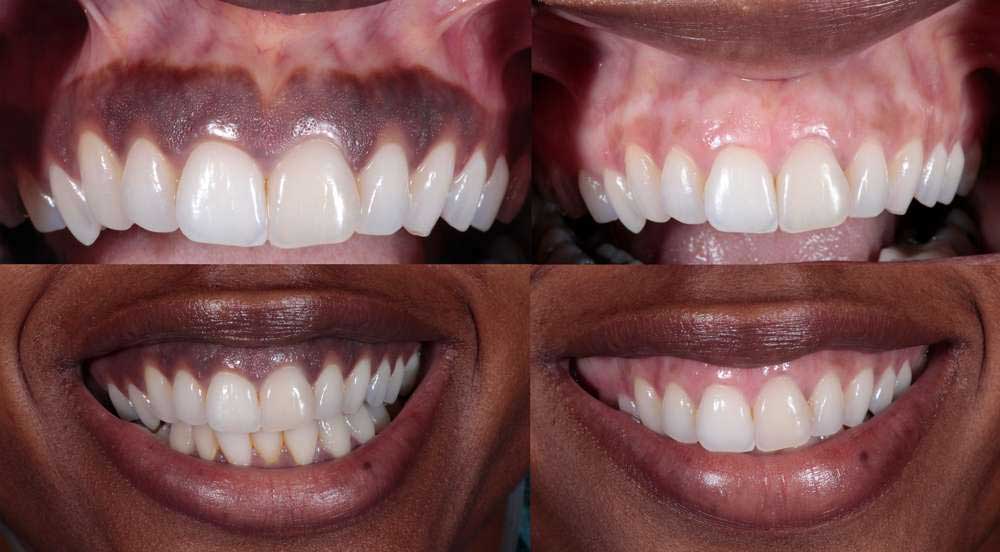
Have you heard about gum bleaching or gum depigmentation? This is the name of a cosmetic periodontal procedure of removing extra pigmentation and dark spots from the gums. There are 2 whitening solutions that can be used to create your renewed smile: a microdermabrasion process and a laser technique. The first solution is a traditional way of whitening. It usually takes less than an hour to complete. An expert removes the pigmented area of tissues and reveals the healthy, pale-pink tissue beneath. You won’t feel your dark gums turning pink because your mouth will be numbed to prevent any discomfort during the procedure.
In laser depigmentation, a dental laser targets and ablates melanin-producing cells in the gums. While tissue is healing, your organism creates a naturally more light gum color. A good news is that a result and the benefits of the gum depigmentation procedure lasts for your entire lifetime! This way of how to make your gums pink will make you forget about creams, gels, and other remedies. The only things you will remember are your smile and the joy from its permanent beauty.
Do you want to learn more about how we treat dark gums? Read about our advanced gum depigmentation treatment and watch Vivians life-changing gum depigmentation before and after video experience.
You May Also Like...

Periodontist Near UCLA: Implant and Gum Disease Care for Westwood and Brentwood
Quick Summary Westwood and UCLA-area patients have a short drive to specialist periodontal care in Brentwood. The...

How to Choose the Right Periodontist in Santa Monica: What to Ask Before You Commit
Quick Summary Board-certification from the American Board of Periodontology, minimally invasive techniques, and...
When to See a Periodontist in Santa Monica: Warning Signs You Shouldn’t Ignore
Quick Summary If you have gum changes that keep showing up, like bleeding when you brush, bad breath that does not...