
Is A Bone Graft Needed Before Getting Dental Implants?
One of the most common procedures to be performed alongside dental implant installation is a dental bone graft. Also called ridge augmentation, this specialized type of dental surgery takes weak, unhealthy bone and prepares it so that it’s strong enough to support tooth roots or dental implants. Your dental specialist is essentially going to recreate bone. It is an extremely successful procedure that can be performed under local anesthesia and opens the doors to numerous types of dental procedures.
What is a Bone Graft?
A dental bone graft is where an oral surgeon or periodontist takes new bone and installs it at a location where the bone is weak or thin. It is a way to “regrow” new bone or to add extra bone to make the jaw stronger. You’ll usually hear about dental bone grafts when discussing specialized dental implant therapy, repairing areas with cysts, after oral surgery, or as part of a socket graft after a tooth is extracted. The surgical site is then covered with gum tissue to allow the new bone to take hold and fuse (osseointegrate) with your jaw.
When is Bone Grafting Recommended?
To put it simply, a dental bone graft is mandatory anytime someone has too much missing bone. Since bone is what supports dental implants, a lack of bone would set someone up for implant failure. For the dental implant placement to be successful, there needs to be enough surrounding bone where the implants are to be installed.
A bone graft might be needed if someone previously had periodontal disease, several missing teeth, or wore dentures for a very long time. Since human bone gradually shrinks away (resorbs) when there are missing teeth, the longer you go living with tooth loss, the greater the risk there is that you’ll need bone grafting for dental implants.
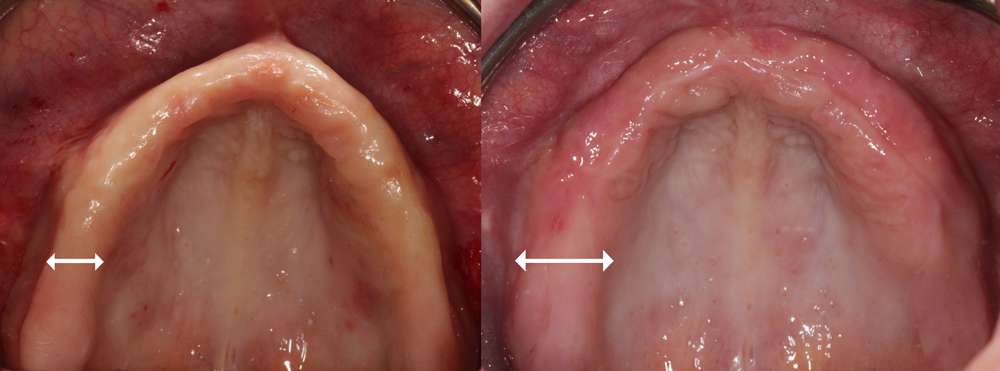
Before and after bone grafting procedure and prior to getting dental implants. You can see how much wider the jaw bone is on the right compared to the before image.
Does Everyone Need a Bone Graft?
Not everyone needs a bone graft. But if you have extensive tooth loss or have been told you don’t qualify for dental implants, it’s likely due to a lack of adequate bone support. When that’s the case, you’ll need bone grafting for dental implants to be successful.
To determine whether or not grafting is necessary, our implant dentist will take an X-ray or scan of your mouth. From there, we’ll evaluate the density and height of your natural bones. If there is adequate support, we can plan the next step of your implant surgery. But if there isn’t, we will need to arrange for bone grafts to be placed before any artificial tooth is installed.
The Bone Grafting Procedure
If you’re planning to get dental implants, the bone grafting procedure is usually performed at a separate visit leading up to the dental implants surgery. It is a separate surgical procedure and requires its own recovery time before we can install a dental implant into that space.
Before placing the bone grafting material, our Los Angeles bone grafting specialists will numb your tissues to prevent any type of discomfort. The bone graft surgery is fairly straightforward in most cases. After it is installed and the tissue is sutured back into place, we will recommend special care in that area until the gums heal.
If you’re getting a bone graft in the upper jaw, it will probably be combined with other oral and maxillofacial surgery procedures such as a sinus lift. The bone augmentation procedure (grafting) is required in this case because the sinus lift is raising the lining of the nasal cavities, and bone will be needed to create a stable foundation between the sinus lining and the bone holding your new implants.
About Bone Graft Material
There are several different types of bone grafts that a person can get. Sometimes we can use natural bone tissue by transplanting healthy bone tissue from one area of your body to another. Other times, the bone grafting material is completely synthetic or from a donor. Synthetic bone grafts work by stimulating new bone growth in that area and are like a fine powder that’s placed directly on top of your jaw bone.
All bone graft material used in our Los Angeles practice is FDA approved and completely safe. The type of dental bone grafts we recommend will depend on your extent of bone loss, how many natural teeth are being replaced, and your current health history. Be sure to let us know if you’re taking any medications or supplements, or have recently been hospitalized.
Alternative Options At Our Practice to Traditional Bone Grafting
Instead of relying on donor bone or synthetic bone, our practice specializes in using the patient’s bone where extracted teeth can become autogenous dentin, ready to be grafted within 15 minutes after extraction. This approach with autogenous dentin is the best way to graft for socket preservation, sinuses augmentation, or filling bone deficiencies.
The benefits of using your own grafting material:
- Faster soft tissue response and bone healing
- Grafting costs you less
- Superior dense bone quality
- Improves dental implant stability
- No rejection, inflammation, disease transmission, or rapid resorption
What Causes Bone Loss?
The alveolar bone along the top of your jaw (nearest your teeth) can resorb (shrink) from things like the loss of natural teeth, gum disease, or wearing a denture for an extended period of time. You can also see bone loss after a tooth extraction, immediately around the socket. That’s why we will sometimes place dental bone grafts immediately after removing a tooth.
Since dental implants rely on strong bone (even though they are “just” an artificial tooth root), we need to restore the height of the alveolar bone before dental implants can be installed.
Bone grafting does require some time to fully integrate before we can perform dental implant surgery. Our Los Angeles implant specialists typically recommend at least a few months for the bone graft to “take.” We will see you periodically to evaluate your dental bone graft and then determine when we can plan a date to install the dental implant(s).
Bone Grafting for Dental Implants in Los Angeles
At the Center for Advanced Periodontal & Implant Therapy, our Los Angeles dental implant surgery specialists offer all necessary adjunctive services required for your replacement tooth. If you have a missing tooth and require a bone graft because of lost bone density, we can perform the procedure here in our office.
If you’ve been told that you aren’t a candidate because you require grafting for dental implants, we encourage you to call our Los Angeles office. We’ll be happy to discuss your options with you so that you can plan for successful dental implant surgery.
You May Also Like...

Is Getting a Dental Implant Painful? Insights and Expectations
Did you know that over 3 million people have dental implants, and that number is growing by 500,000 annually? Despite...
Elevating Dental Implant Standards in Los Angeles for Patient Safety
Sarah's Implant Journey: A Testament to Transformation Meet Sarah. Three years ago, Sarah avoided mirrors, rarely...
Comparing Immediate Load vs. Traditional Dental Implants
Dental implants have revolutionized the way we replace missing teeth. They're not just prosthetics; they restore the...